
How to Choose the Right Agro Commodity Supplier in Asia: A 5-Point Buyer’s Guide
Asia is the world’s largest hub for rice, spices, palm oil, coffee, cocoa, rubber and coconut products. But with thousands of exporters across Indonesia, Vietnam, India and Thailand—verification is your strongest shield against fraud and inconsistent quality.
According to UN Comtrade, Asia accounts for more than 55 percent of global agro-commodity exports. Despite this dominance, the region also holds the highest risk of supplier fraud, mislabeling, hidden middlemen and container stuffing manipulation.
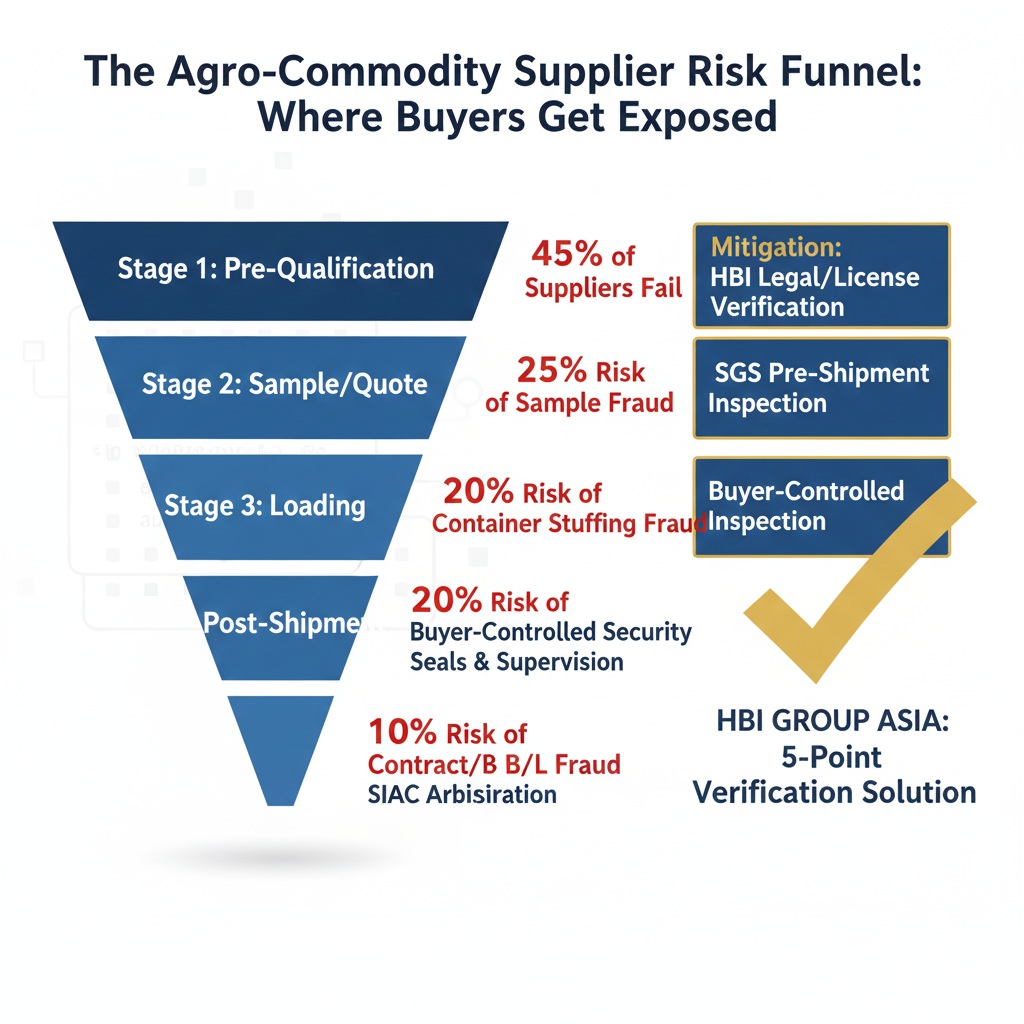
This guide reveals the 5 essential steps buyers must follow to choose a reliable, long-term agro-commodity supplier in Asia. These methods reflect the exact verification system used inside BridgeConnect™ and HBI Group Asia’s supplier network.
1. Legal Verification & Company Due Diligence
What You Must Verify
- Business Registration: Check the company registration certificate via national government portals.
- Export License: Ensure they hold licenses for the specific product (rice, spices, palm oil, etc.).
- Bank Account Verification: The legal entity name must match the bank beneficiary exactly.
- Use trusted databases such as BridgeConnect™ to cross-check exporter history.
2. Mandatory SGS Testing & Third-Party Quality Control
Quality disputes are the number one cause of financial loss in agro-commodity trade. To eliminate risk, buyers must use independent inspection agencies such as SGS, Intertek, or Bureau Veritas.
SGS Testing Checklist
- Moisture content
- Broken grain percentage (for rice)
- FFA value (palm oil)
- Adulteration & foreign matter tests
- Final PSI (Pre-Shipment Inspection)
For further detail on SGS standards for rice, see our guide: Import Premium Rice From Asia.
3. Full Factory / Mill Audit (Physical or Virtual)
Audit Checklist
- Storage hygiene and pest control
- Actual production capacity (tons/day)
- Quality control department verification
- Traceability records from farm to container
- Container loading areas and safety protocols
4. Fraud Prevention During Container Stuffing
The majority of commodity fraud occurs during container loading. Many exporters switch product quality after the PSI when inspectors leave.
How to Prevent Loading Fraud
- Insist SGS supervises 100 percent of loading
- Use buyer-provided seals
- Require photo & video evidence
- Record truck plate and seal numbers on the Bill of Lading
For broader agricultural risk insights, consult the FAO global agricultural risk database.
5. Contract Protections & Arbitration Clauses
Essential Clauses
- SGS Report = Final Quality Standard
- Arbitration: Use SIAC or ICC
- Clear payment terms (LC, 30/70, escrow)
- Force majeure defined with strict limits
- Demurrage responsibility made explicit
Buyers participating in the HBI Cooperate Program receive ready-made contract templates and arbitration setups.