
A Buyer’s Guide to Asian Spices, Coffee, Cocoa & Nuts
1: The High Value Basket of Asian Commodities
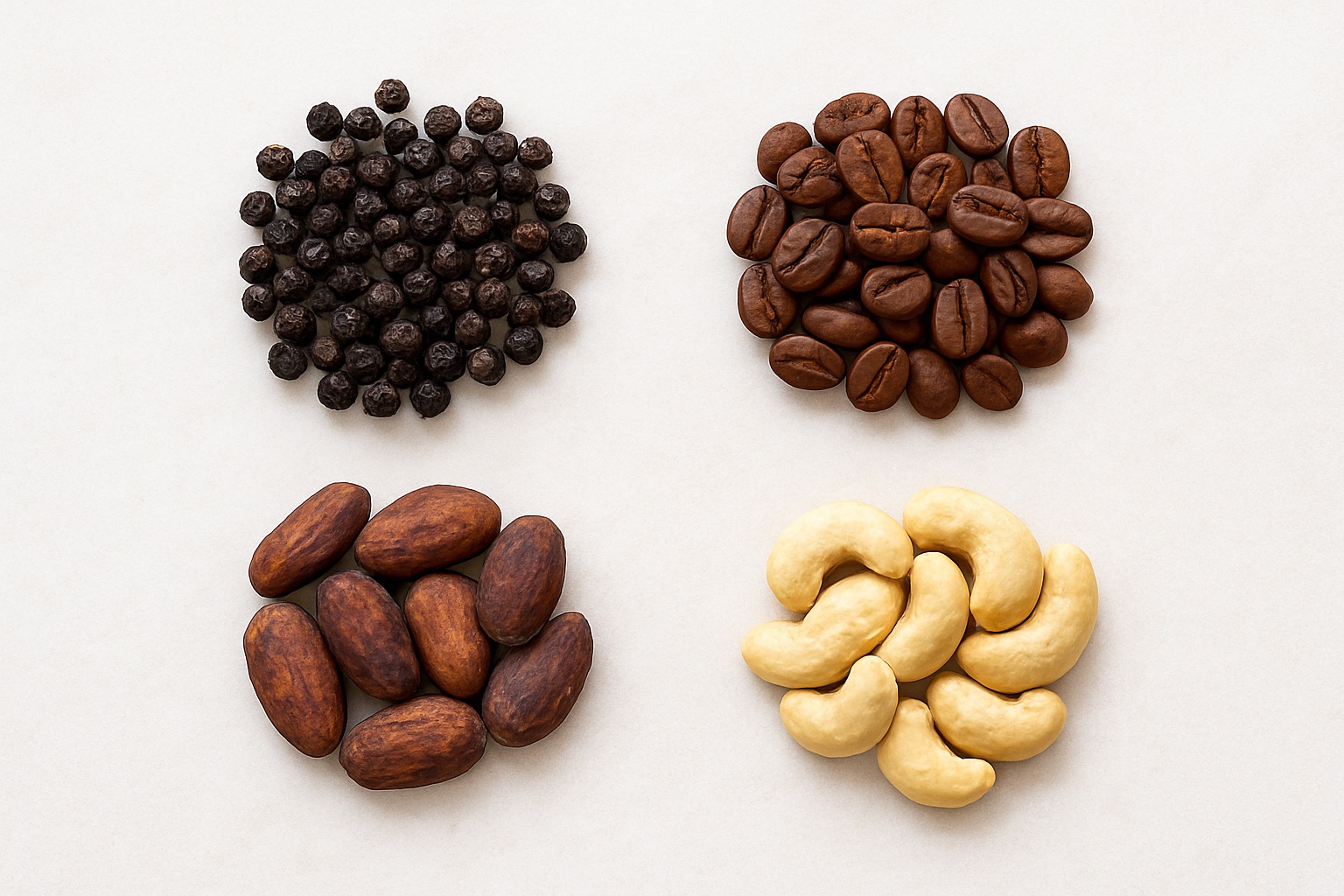
Asia is the worlds primary source for a highly diverse, high value basket of specialty goods: aromatic Spices (pepper, nutmeg, cinnamon), robust Coffee (Robusta and specialty Arabica), fermented Cocoa, and prized Nuts (Cashews). For international buyers, this market offers immense opportunity, but it demands commodity specific quality control and sourcing expertise.
Unlike bulk agro commodities, securing quality in this mixed basket requires commodity specific expertise: from verifying spice volatile oil content to assessing cocoa bean fermentation quality. The challenge is ensuring that the final product meets both the buyers grade specification and global food safety mandates.
At High Business International (HBI Group Asia), we treat every commodity uniquely. Our verification protocols go beyond general audits to focus on the critical points for each product. Here is your essential guide to securing quality and compliance when you Import Raw Materials Asia.
2: Deep Dive: Commodity Specific Quality Checkpoints
The integrity of these high value commodities rests on specific checkpoints throughout processing:
Spices (Pepper, Nutmeg, Cinnamon, Cloves)
- Risk: Moisture and Contamination (Mold, Aflatoxin). Spices are highly vulnerable to microbial growth if dried or stored improperly.
- Verification: HBI performs pre shipment checks on moisture content and volatile oil percentage, and audits proper fumigation certification.
Coffee (Robusta & Specialty Arabica)
- Risk: Green Bean Integrity and Drying Consistency. Mixed grades or defects from improper drying destroy the final cup quality.
- Verification: We utilize third party inspection to verify bean grade, screen size, and often require Q Grader scoring and official cupping notes before export.
Cocoa Beans
- Risk: Fermentation Quality and Heavy Metals. Poorly fermented beans result in poor chocolate flavor. Heavy metals like Cadmium are a major regulatory risk.
- Verification: Our process includes a detailed cut test to assess fermentation and lab testing for heavy metal contamination to ensure product safety.
Nuts (Cashews, Peanuts, Coconut Based)
- Risk: Rancidity and Pest Infestation. Improper storage or delayed processing causes rancidity (loss of quality) and exposes the cargo to pests.
- Verification: HBI checks for grade consistency (W180, W240), integrity (broken percentage), and verifies cold storage conditions and proper container fumigation.
3: Buyers Shield: Certifications and Food Safety
Mandatory Food Safety Standards
For all food grade commodities, compliance with international food safety standards is essential to access global markets, particularly Europe. Buyers must demand proof of processors adherence to ISO 22000 and HACCP (Hazard Analysis Critical Control Point) systems. HBI audits these systems as part of our rigorous Quality Control Process.
Sustainability and Ethical Sourcing
Ethical production is paramount for Coffee and Cocoa. Certifications like Rainforest Alliance or Fair Trade are often prerequisites for accessing premium markets. These standards ensure biodiversity protection, climate action, and worker well being. We verify that the physical product being loaded matches the volume and source required by the certificate.
4: Traceability and Risk Mitigation
The Aggregation and Traceability Challenge
Most of these high value goods originate from millions of smallholder farmers. The process of aggregating and blending product creates a high risk of quality degradation and loss of traceability. This Farm to Mill traceability gap is the single greatest risk point for buyers.
HBI addresses this by implementing digital tracking and on site checks at the primary collection and processing points. Our Real Time Sourcing Tracker provides the visibility needed to mitigate commingling and food safety risks from the initial processing stage through to the export port. For the highest level of assurance, our Cooperate Gold Program guarantees end to end verification.
Frequently Asked Questions (FAQ)
A: The primary food safety risks are **Aflatoxins** (fungal toxins, common in nuts and spices due to high moisture or poor storage) and **heavy metal contamination** (particularly Cadmium in Cocoa). Buyers must demand lab testing from accredited labs, often following EU food safety guidelines, and verify the facility’s HACCP compliance.
A: Cocoa quality is verified primarily through the **cut test**, which assesses the degree of fermentation, a critical step that develops flavor. Our QC process audits the fermentation and drying protocols at the farm or cooperative level, ensuring the beans meet required flavor precursors before reaching the mill. This is key to specialty cocoa sourcing.
A: Unlike Palm Oil which has RSPO, this basket uses multiple certifications: **Rainforest Alliance** and **Fair Trade** are dominant for Coffee and Cocoa. **Organic** certification is critical for premium Spices. Buyers should use HBI’s Cooperate Gold Program to verify that the certified volume physically matches the shipment.
A: Yes, but it requires digital tools. Since smallholder produce is aggregated at collection centers, true traceability relies on tracking the **batch** data before and after blending. HBI uses digital systems, including the Real Time Sourcing Tracker, to maintain batch integrity and link the final product back to the sourcing cooperatives.
A: Specialized QC and verification, outlined in our Quality Control Process, adds a marginal premium. However, this cost is minimal compared to the loss incurred from shipment rejection due to Aflatoxin, rancidity, or customs issues. This investment guarantees product integrity and prevents catastrophic financial and reputational losses.
Conclusion: Partner for Verifiable Quality
Sourcing Asia’s premium commodities requires a focused, commodity specific verification strategy. You must have expert eyes on the ground to ensure your shipment meets the required quality grade, regulatory mandates, and ethical standards.
Dont leave quality to chance. Secure your next shipment of Spices, Coffee, Cocoa, or Nuts with verifiable quality and compliance by partnering with HBI Group Asia for guaranteed export import success.